


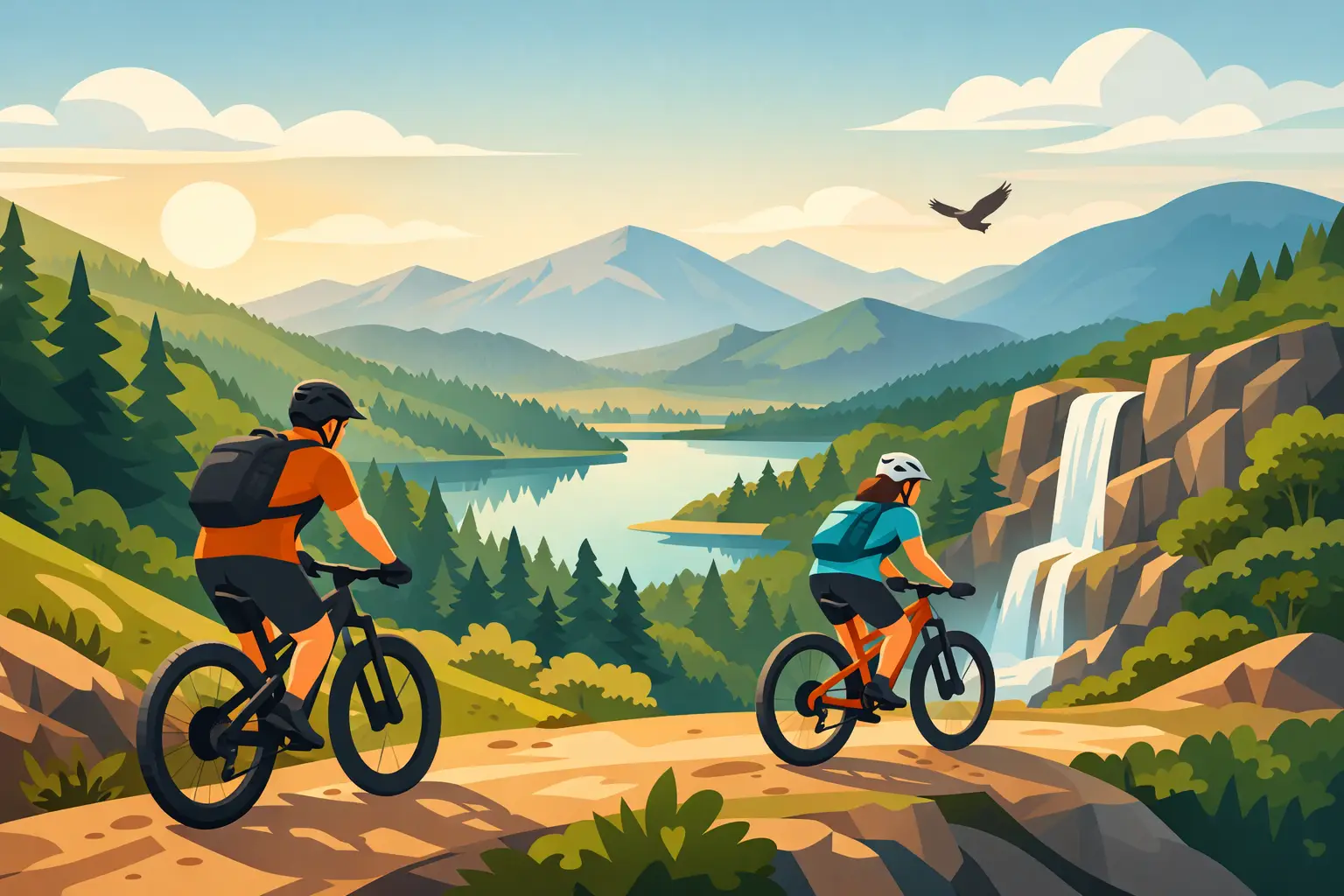
A climb above a Georgian village can begin with vineyard views, turn into a rough forest track, and finish at a family table with hot khachapuri and cold mountain spring water. That contrast is what makes Georgia mountain biking tours so memorable. This is not a destination built around bike parks and polished lift lines. It is a country for riders who want big landscapes, local encounters, changing terrain, and a genuine sense of arrival.
Georgia, the country in the South Caucasus, rewards curiosity. One day may bring rolling lanes through Kakheti wine country; another, long gravel ascents beneath the snow-covered Caucasus peaks. A guided ride makes those transitions easier to enjoy, especially when routes reach villages where road conditions, weather, and services can change quickly.
Why Georgia mountain biking tours feel different
Georgia has the geography for serious adventure but retains the warmth of a place where hospitality is part of daily life. Trails and quiet backroads pass medieval towers, Orthodox churches, alpine meadows, river valleys, walnut groves, and stone villages that feel far from crowded European cycling regions.
The riding is varied rather than uniform. Expect unpaved jeep tracks, rocky doubletrack, forest roads, farm lanes, and sections of pavement linking valleys. On many routes, the downhill is earned through a substantial climb. That is ideal for riders who enjoy endurance, scenery, and a little unpredictability, but it is worth being honest about your expectations: Georgia is not primarily a destination for groomed flow trails or downhill-only riding.
A good tour also adds the details that make the country vivid. Stop for coffee in a small town, taste local cheese in the mountains, or share a traditional meal after a long day in the saddle. Georgia’s food and wine culture is not an extra activity placed around the ride. It is often part of the ride itself.
Choose a region that matches your riding style
Georgia is compact on a map, but mountain roads make travel times longer than many first-time visitors expect. Choosing one or two regions rather than trying to cross the entire country creates a much better cycling holiday.
Kazbegi for high-mountain drama
The Kazbegi region north of Tbilisi is an excellent choice for riders who want bold Caucasus scenery and challenging climbs. The landscapes around Stepantsminda are defined by deep valleys, steep slopes, and views toward Mount Kazbek. Rides can combine mountain roads, old military tracks, and quieter local routes, with stops at historic churches and villages.
Altitude matters here. Even strong riders may feel the difference on a sustained climb, especially after arriving from sea level. Weather can also shift fast, with sunshine, wind, fog, and rain all possible on the same day. A guide who knows the terrain can adjust the plan before conditions become uncomfortable.
Svaneti for remote trails and ancient towers
Upper Svaneti is one of Georgia’s most dramatic active-travel regions. Around Mestia and Ushguli, cycling routes lead through high valleys framed by glaciers and peaks, with the iconic stone Svan towers visible in many villages. It is a powerful setting for experienced riders who value remote travel as much as the cycling itself.
The trade-off is logistics. Roads can be rough, distances are meaningful, and weather may affect access. Multi-day trips work best here, allowing time for acclimatization, shorter recovery rides, and flexible route choices. Svaneti is less about rushing from one landmark to another and more about being present in the mountains.
Kakheti for easy cycling, wine, and open views
Kakheti offers a gentler side of Georgia mountain biking tours. Its rolling country roads and vineyard landscapes suit travelers who want active days without constant technical riding. Routes can connect wine villages, monasteries, family cellars, and broad views across the Alazani Valley toward the Caucasus range.
This region is especially appealing for couples, mixed-ability groups, and travelers adding cycling to a wider cultural itinerary. An e-bike can be a smart option for anyone who wants to enjoy the hills, tastings, and scenery without turning every day into an endurance test.
Borjomi and central Georgia for forest riding
Central Georgia brings wooded trails, mineral-water towns, and practical access from Tbilisi or Kutaisi. Around Borjomi, riders can find forest roads and mountain terrain that feel cooler and greener in summer than the lower valleys. This is a strong choice for a short active extension or for travelers who want a balance of riding, nature, and cultural sightseeing.
When to ride in Georgia
For most travelers, late spring through early fall is the best window. May and June bring green hillsides, flowing rivers, and comfortable temperatures in many regions. July and August are ideal for higher-elevation rides in Kazbegi and Svaneti, although lower areas such as Kakheti can be hot in the middle of the day.
September and October are particularly rewarding for cycling and food-focused travel. The air is often clear, vineyards are active with harvest season, and the colors in the mountains begin to change. Conditions depend on elevation, though. High passes may see early snow, while valley rides can remain pleasant well into autumn.
Winter is generally not a mountain biking season in the high Caucasus. Snow and ice close many routes, and remote services become limited. Travelers visiting then may prefer skiing, snowshoeing, city experiences, or winter travel in lower regions.
What level of fitness and skill do you need?
The right answer depends on the tour, not on the label “mountain biking.” A route on a gravel road with steady climbing requires a different skill set from rocky singletrack with tight descents. Before booking, consider how comfortable you are riding loose surfaces, braking on steep terrain, handling long descents, and spending several hours in the saddle.
For a first active trip to Georgia, an easy cycling or moderate off-road itinerary can be the better choice. You still get the views, villages, and sense of adventure, but with more time to stop and enjoy them. Strong riders can choose routes with bigger elevation gain and multi-day mountain crossings. Private tours are particularly useful for mixed groups because the daily pace, rest stops, and support can be tailored.
Do not underestimate the effect of heat, altitude, and rough roads. A distance that feels simple at home may take longer in the Caucasus. That is not a drawback. It is part of why a well-planned itinerary should leave room for a long lunch, a photo stop, or a change of route.
Why a guided tour is worth considering
Independent cyclists can certainly ride in Georgia, but guided travel removes several practical obstacles. Remote routes may have limited signage, mobile coverage can disappear in the mountains, and trail conditions are not always reflected on digital maps. A local guide understands which roads are rideable after rain, where water can be refilled, and when a vehicle transfer is the sensible choice.
Support also matters when you are far from a bike shop. Depending on the itinerary, a guided trip may include a well-maintained mountain bike or e-bike, helmet, repair equipment, luggage transfers, vehicle support, accommodations, and meals. Ask what is included rather than assuming every tour follows the same format. Serious riders may prefer to bring their own pedals, saddle, helmet, or even their complete bike for familiar fit and performance.
Colour Tour Georgia can arrange cycling experiences alongside the parts of a Georgian journey that make the ride richer: Tbilisi stays, mountain accommodations, transfers, wine visits, and cultural stops. That combination is valuable when you want adventure without spending your vacation solving transport puzzles.
Pack for changing conditions, not just the forecast
Layering is more useful than a single heavy jacket. A warm morning in Tbilisi can become a cold, windy descent in the mountains, while afternoon storms are common in some high regions. Bring a light waterproof shell, breathable layers, full-finger gloves, sunglasses, sunscreen, and a refillable water bottle. Padded shorts and shoes with dependable grip are essential for rough terrain.
If you use your own bike, carry basic spares that match it: tubes or a tubeless repair kit, brake pads, a derailleur hanger, and a compact multitool. Local support can handle many issues, but unusual components are harder to replace outside major cities. Travel insurance that covers cycling and emergency evacuation is a sensible precaution for any mountain itinerary.
Georgia rewards riders who arrive ready to adapt. Choose a route that suits your actual fitness, leave a little space in the schedule, and let the mountain road lead you to the next meal, village, and unforgettable view.