


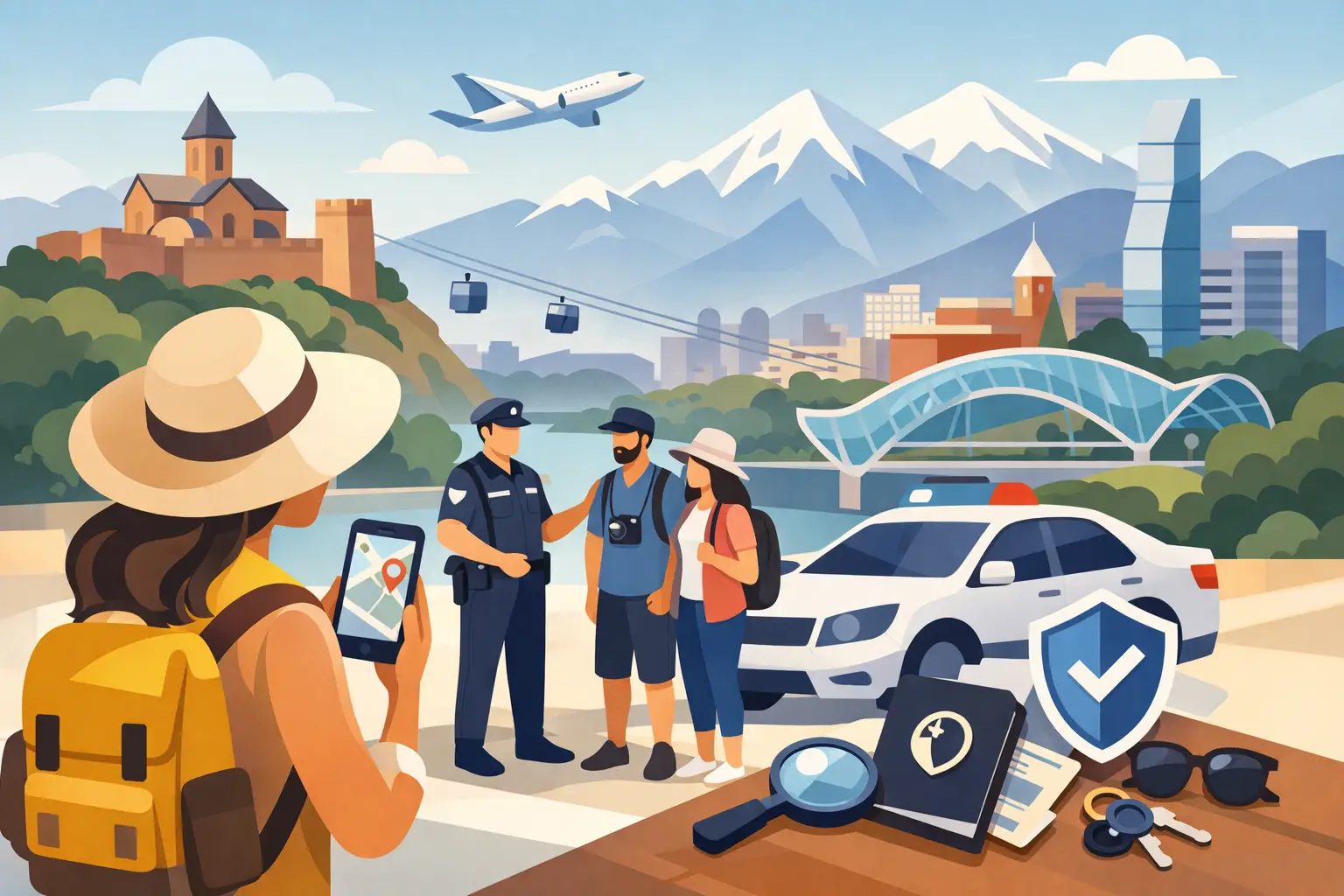
A table crowded with khachapuri, a toast raised from a clay wine cup, and a road that suddenly climbs toward snowy Caucasus peaks: Georgia feels wonderfully generous from the first day. This Georgia travel safety guide helps you enjoy that generosity with good judgment, whether you are taking a city break in Tbilisi, tasting wine in Kakheti, or setting out for Svaneti, Kazbegi, Tusheti, or Khevsureti.
Georgia is generally welcoming and comfortable for visitors, especially in the main tourism areas. The practical risks are less about street crime and more about mountain weather, fast-changing road conditions, unfamiliar driving habits, and planning remote adventures too casually. A little preparation leaves more room for long lunches, ancient monasteries, and the unforgettable views that bring travelers here.
Is Georgia Safe for Travelers?
For most visitors, Georgia is a safe and easy country to travel through with normal precautions. Tbilisi, Batumi, Kutaisi, Mtskheta, and the major wine regions are well used to international guests. Violent crime against travelers is uncommon, but the same habits that work in any large city apply: keep your passport and valuables secure, use licensed transportation, and avoid poorly lit or isolated places late at night.
Pickpocketing can occur in busy areas, on public transportation, and around nightlife districts. Do not leave a phone or bag unattended at a restaurant table, and carry only the cash you expect to use that day. Hotels can usually store passports and extra valuables in a safe, though keeping a secure digital and paper copy of your passport details is sensible.
Georgia’s hospitality can be powerful. A host may insist you eat more, drink another toast, or stay longer at the table. Enjoy the warmth, but set your own limits politely. If you are driving, hiking early, or simply do not drink alcohol, say so clearly. No good host wants a guest to feel pressured.
City Smarts in Tbilisi and Beyond
Tbilisi is lively, walkable in central neighborhoods, and full of steep lanes, uneven pavement, and old stone steps. Comfortable shoes matter as much as a stylish pair. After rain or in winter, sidewalks and stairways can be slippery, particularly in the Old Town and on the approach to hilltop viewpoints.
Use registered taxis or a reputable ride-hailing service rather than accepting a ride from someone who approaches you on the street. Agree on the price before entering an unmetered taxi. On longer intercity journeys, organized transfers are often a calmer choice than trying to negotiate transport after a long flight.
Georgia is socially conservative in some settings, particularly outside major cities. Visitors of all backgrounds are welcomed, but modest dress is appropriate in active churches and monasteries. Cover shoulders and knees when requested, and women may be asked to cover their heads. Public displays of affection, especially between same-sex couples, can draw unwanted attention in more traditional areas. Situational awareness is the practical approach.
Public demonstrations occasionally take place in Tbilisi. They are usually concentrated around government buildings and central avenues. Follow local instructions, keep clear of crowds if tensions rise, and allow extra travel time if your hotel or dinner plans are near a demonstration route.
Mountain Roads Require Respect
The drive from Tbilisi to Kazbegi can be spectacular, but it is not a sightseeing road to treat casually. Mountain traffic, sharp turns, heavy trucks, fog, snow, and sudden weather changes demand a patient driver. The same applies even more strongly to routes into Svaneti, Khevsureti, and Tusheti.
Tusheti is a special case. Its access road is seasonal, narrow, unpaved in places, and exposed, with steep drop-offs and river crossings. Travel there should be arranged with an experienced local driver in a suitable high-clearance vehicle. It is not the place for a first attempt at off-road driving or for relying on a standard rental car’s navigation system.
If you rent a car, inspect it carefully, understand the insurance coverage, and confirm whether travel on unpaved roads is permitted. Never drive after drinking, even after a single festive Georgian toast. Roads may look quiet, but livestock, pedestrians, and vehicles passing unpredictably are common outside cities.
In winter, ask about snow chains, winter tires, road closures, and the actual forecast for your route. A sunny morning in Tbilisi does not predict conditions at Gudauri or near Mount Kazbegi. Build flexibility into ski, snowshoeing, and mountain transfer days.
Safe Trekking in the Caucasus
Georgia’s highlands reward prepared hikers with medieval towers, alpine meadows, remote villages, and ridgelines that make every uphill step worthwhile. They also demand realistic planning. Trails in Svaneti and around Kazbegi are popular in season, while multi-day routes in Tusheti and Khevsureti can be isolated and lightly marked.
Do not assume mobile signal will be available. Download offline maps before leaving town, carry a power bank, and tell a reliable person where you are going and when you expect to finish. For long or remote treks, a local guide is not just a cultural addition. A guide can assess weather, river levels, route conditions, village logistics, and your group’s pace.
Pack for four seasons, even in summer. A warm layer, waterproof shell, sun protection, enough water, food, first-aid basics, and a headlamp are practical essentials. Afternoon storms are common in the mountains, and snow can remain on high passes well into the warmer months.
Be honest about fitness. A trek described as moderate may still involve long climbs, altitude, loose terrain, and several hours without services. Choose an easy hiking day, a guided village walk, or a scenic 4×4 route if that better suits your group. Georgia has no shortage of beautiful experiences at every activity level.
Food, Water, and Health
Georgian food is one of the country’s great pleasures, from fresh herbs and grilled meats to vegetarian bean dishes, dumplings, and cheeses. Eat at busy restaurants where food is freshly prepared, and let staff know about allergies before ordering. Common ingredients such as walnuts, dairy, wheat, and eggs appear often in traditional dishes.
In Tbilisi and many visitor areas, bottled water is easy to find and widely used by travelers. Water quality can vary by location and building, so ask your accommodation for current local advice. When hiking, carry treated or bottled water rather than assuming a mountain stream is safe to drink.
Bring any prescription medication in its original packaging, with enough for your full trip plus a small buffer for delays. Travel insurance that covers medical treatment and emergency evacuation is particularly valuable for trekking, skiing, cycling, and remote-road itineraries. Medical facilities are strongest in Tbilisi and other large cities; help can be much farther away in the highlands.
The emergency number in Georgia is 112 for police, fire, and medical assistance. Save it before arrival. If you need help, a hotel, guide, restaurant manager, or driver can often assist with translation and explain your location to emergency services.
Borders and Areas to Avoid
Georgia has unresolved conflicts involving the regions of Abkhazia and South Ossetia. Travelers should not attempt to enter these areas from Georgian-controlled territory and should avoid areas close to the administrative boundary lines. Access rules are sensitive and crossing from Russia into these regions can create serious legal problems under Georgian law.
International travelers should also check their own government’s most current travel advice before departure, especially if regional political conditions change. Keep your itinerary, accommodation details, and onward travel plans accessible on your phone and in print. This is useful at airports, border crossings, and during any unexpected transport disruption.
A Simple Georgia Travel Safety Checklist
Before your flight, make sure you have travel insurance suited to your activities, copies of key documents, offline maps, a charged power bank, and clothing for changing weather. Once in Georgia, use reputable drivers, keep your plans flexible in the mountains, and ask local experts about road and trail conditions rather than trusting a generic forecast.
For travelers who want the country’s wild landscapes without carrying every logistical detail alone, a locally guided itinerary can make a meaningful difference. Colour Tour Georgia can pair cultural days in Tbilisi and Kakheti with properly planned mountain transfers, trekking support, winter activities, or off-road routes matched to the season and your confidence level.
Georgia is at its best when you travel with curiosity and a little patience. Leave time for weather, for winding roads, and for the conversation that begins with a cup of tea and somehow becomes the highlight of the day.