


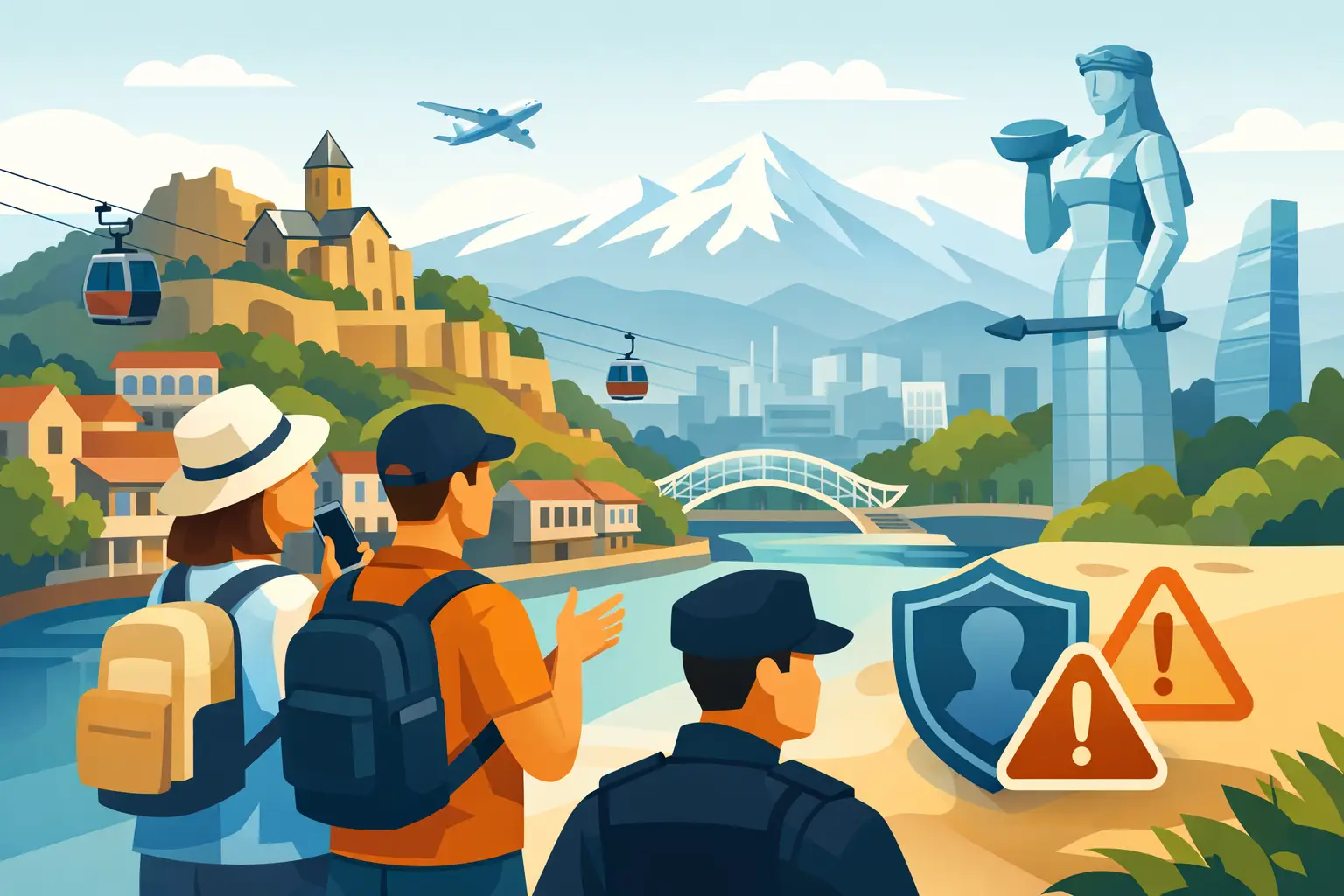
A toast of amber wine in a family cellar, a late-night walk through Tbilisi’s Old Town, and a road that climbs toward the snow-covered Caucasus can all happen in the same week. But is Georgia safe for tourists? For most visitors, Georgia is a welcoming and manageable destination when they use the same good judgment they would in any unfamiliar country – and give mountain weather, road conditions, and local events the respect they deserve.
Georgia is not a destination to experience from behind a hotel window. Its pleasures are wonderfully immediate: a supra table shared with strangers, medieval towers above Mestia, quiet monastery courtyards, and the first view of Mount Kazbegi from the Georgian Military Highway. Traveling confidently means planning for the practical realities behind those moments.
Is Georgia Safe for Tourists in Everyday Travel?
In the main visitor areas, many travelers find Georgia friendly and comfortable to explore. Violent crime affecting visitors is generally uncommon, and Georgians are widely known for extraordinary hospitality. Tbilisi, Batumi, Kutaisi, Mtskheta, Kakheti, Kazbegi, and Svaneti welcome international guests throughout the year.
That said, petty theft can happen anywhere people gather. Keep a close hold on phones, wallets, passports, and bags in busy streets, markets, transport hubs, bars, and nightlife areas. Do not leave valuables visible in a parked car. Use hotel safes when available, carry a copy of your passport separately, and avoid carrying every bank card or large amounts of cash at once.
For solo travelers, Georgia can be a rewarding choice, especially on well-planned city breaks and guided regional trips. The usual habits still matter: tell someone where you are going, choose licensed or clearly identified transportation late at night, and step away from any situation that feels uncomfortable. Travelers who plan to hike alone should be especially conservative about route choice and weather.
City Safety: Tbilisi, Batumi, and Kutaisi
Tbilisi is lively rather than threatening. The central districts are made for wandering, but uneven pavement, steep lanes, and poorly lit side streets can be more of a practical concern than crime. Wear shoes with grip, particularly after rain, and take care on the old balconies and stairways that make the city so photogenic.
Taxi misunderstandings are more common than serious safety problems. Agree on a fare before entering an unmetered cab, or use a reputable ride-hailing app where service is available. If you are arriving on a late flight, a pre-arranged airport transfer removes the first and most tiring negotiation of a trip.
Batumi is a popular Black Sea resort with a long waterfront promenade, while Kutaisi offers a slower-paced base for western Georgia. In both, use normal night-time awareness around bars and entertainment districts. Drink responsibly, keep an eye on your glass, and do not accept rides from drivers who seem impaired or aggressive.
Demonstrations and Political Events
Georgia has an active civic and political life. Demonstrations, particularly in central Tbilisi, can occur with little notice and may affect traffic, public transportation, or access to landmarks and hotels. Most visitors are not the focus of these events, but a peaceful gathering can change quickly.
The sensible approach is simple: do not join crowds, do not photograph confrontations, and leave the area if the atmosphere becomes tense. Ask your hotel, guide, or local host about routes for the day, especially if you are staying near Parliament Avenue or other central government areas. Keep your itinerary flexible enough to substitute a museum, wine tasting, sulfur bath, or neighborhood walk if streets are temporarily closed.
Before departure and during your stay, check the travel advice issued by your own government. Conditions and official recommendations can change, and your embassy or consulate is the best source for country-specific assistance.
Border Areas and Places You Should Avoid
Georgia has two breakaway regions, Abkhazia and South Ossetia, where the political and security situation is complex. Travelers should not attempt to enter these areas or approach administrative boundary lines. Access restrictions can be serious, and entering from the Russian side may create legal problems under Georgian law.
This does not prevent visitors from enjoying the country’s major cultural and outdoor routes. Svaneti, Kazbegi, Kakheti, Borjomi, Vardzia, Adjara, and most other visitor regions are distinct from these restricted areas. Still, if you are driving independently in a remote location, use an up-to-date offline map, follow local guidance, and do not rely on a road simply because it appears on a map.
The Biggest Safety Issue: Mountain Roads
For many travelers, transportation is the part of a Georgian journey that needs the most thoughtful planning. The landscapes are dramatic because the roads cross high passes, narrow valleys, and areas prone to rain, snow, fog, rockfall, and landslides. A journey that looks short on a map can take far longer than expected.
The Georgian Military Highway to Kazbegi is usually accessible, but winter snow and heavy weather can bring delays or closures. Roads to Tusheti, Khevsureti, and some high Svaneti routes are seasonal adventures, not ordinary drives. Tusheti’s Abano Pass is typically open only in the warmer months, and travelers should use an experienced local 4WD driver rather than attempt it in a standard rental car.
If you rent a car, drive defensively. Road rules may be familiar, but driving styles, livestock, potholes, overtaking, and sudden weather can be less predictable than at home. Avoid driving after dark outside major cities. Check whether your rental agreement and insurance allow you to use unpaved mountain roads, and never let a packed schedule pressure you into continuing through poor conditions.
For visitors who want the scenery without the driving burden, a private driver or guided tour is often the safer and more relaxing option. A local driver knows where roadworks narrow the route, when a pass is likely to close, and which roadside stop is worth the time.
Hiking, Trekking, and Winter Safety
Georgia rewards active travelers with exceptional routes, from easy walks near Juta to multi-day trails in Svaneti and demanding crossings between Tusheti and Khevsureti. But wilderness infrastructure is not uniform. Trail marking may be limited, cell coverage can disappear, and mountain weather can turn from sun to hail within an hour.
Carry water, warm layers, rain protection, a charged phone and power bank, offline navigation, and food beyond what you expect to need. Tell your accommodation or guide your planned route and return time. For high-altitude or remote multi-day hikes, a knowledgeable guide is not merely a convenience. It adds route judgment, local communication, and a realistic decision-maker when weather changes.
Winter visitors should treat snowshoeing, skiing, and mountain transfers with the same care. Gudauri has developed facilities and a strong winter atmosphere, but avalanches, wind, and poor visibility remain natural mountain risks. Follow resort instructions, use appropriate equipment, and do not head into backcountry terrain without qualified guidance and avalanche knowledge.
Food, Water, Health, and Local Customs
Georgia’s food is one of its great travel memories, from khachapuri and khinkali to fresh herbs, walnuts, grilled meats, and long wine-filled feasts. Restaurants and guesthouses used by visitors are generally straightforward to enjoy. If you have allergies, learn or carry a written explanation of your needs, as dishes often include walnuts, dairy, wheat, and meat stock.
Bottled water is easy to find, and many travelers use it in cities and rural areas for simplicity. Pack any essential prescription medication in its original packaging, plus enough for delays. Comprehensive travel insurance that covers medical care, evacuation, cancellation, and adventure activities is a wise choice, particularly for trekking, skiing, cycling, or remote driving.
Georgia is socially warm but culturally traditional in some settings. Modest dress is appreciated at churches and monasteries: covered shoulders and knees are a good rule, and women may be asked to cover their heads. Ask before photographing people, religious services, or homes. A few words of Georgian, a patient smile, and genuine curiosity go a long way.
In an emergency, call 112 for police, fire, or ambulance services. Save the number before you travel, along with your accommodation contact and your insurer’s emergency line.
Plan for Freedom, Not Friction
Georgia is safest and most enjoyable when the pace of the trip matches the terrain. Give yourself an extra night before an international flight after a remote mountain stay. Do not try to combine Mestia, Ushguli, Kazbegi, and Kakheti in a few rushed days. Build time for road delays, changing weather, and the unscheduled invitation to lunch that may become the highlight of your journey.
For first-time visitors, combining a few independent days in Tbilisi with organized day trips or a multi-day route can offer an excellent balance of freedom and support. Colour Tour Georgia can arrange guides, transfers, accommodations, and activity-focused itineraries for travelers who prefer local logistics handled with care.
Come prepared, stay aware, and let Georgia reveal itself at the pace it deserves. The reward is not just dramatic scenery and remarkable food, but the confidence to say yes when a mountain village, a winemaker, or a new friend invites you to see one more unforgettable corner of the country.