


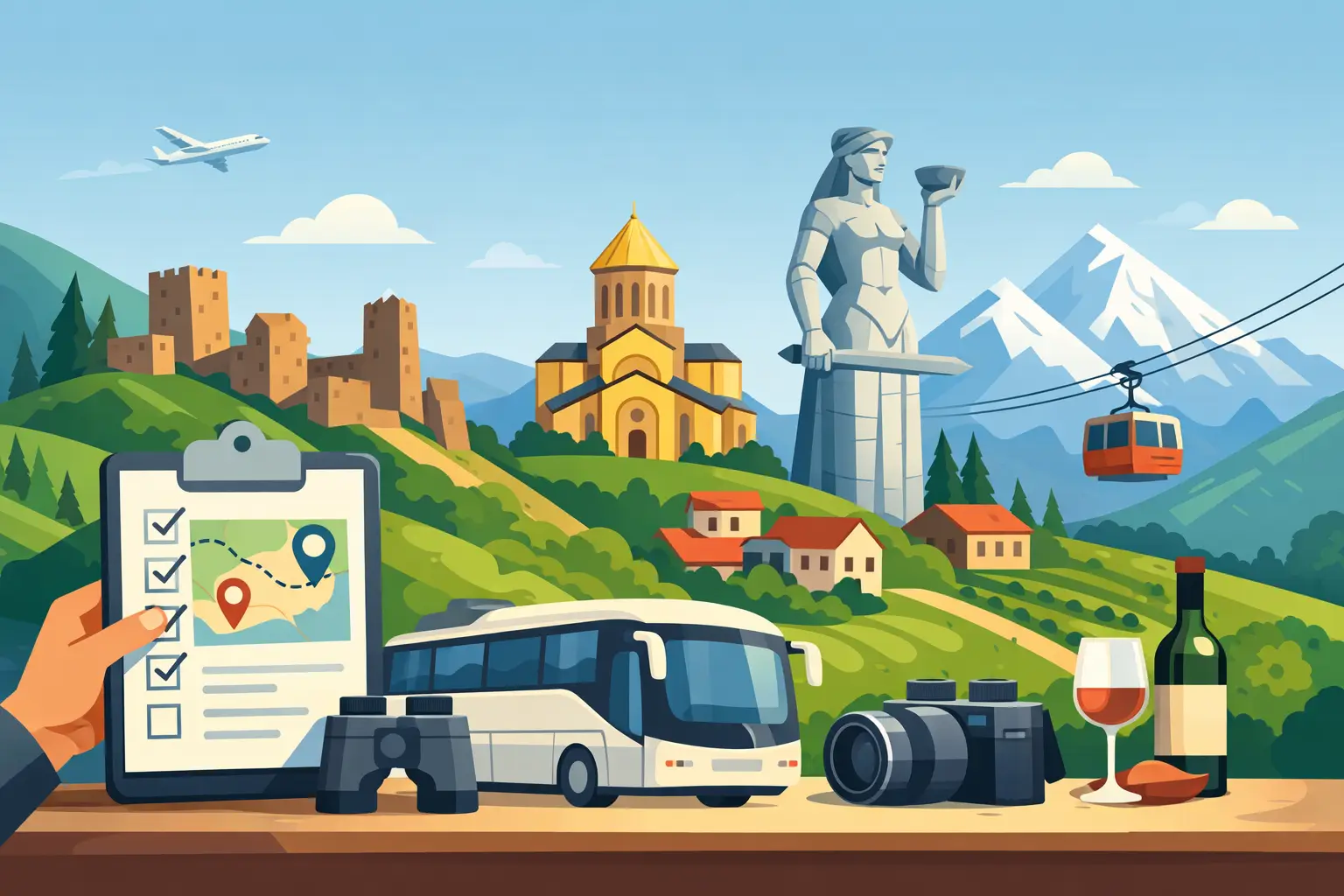
A single day in Georgia can take you from Tbilisi’s old balconies and sulfur baths to mountain viewpoints, ancient monasteries, and a long lunch with amber wine. That variety is exactly why knowing how to choose Georgia tours matters. The best trip is not necessarily the one that covers the most ground. It is the one that matches your time, energy, interests, and the season when you travel.
Georgia is compact on a map, but roads, elevation, weather, and the temptation to stop for every view can make distances feel very different from what they look like. Start with the experience you want to remember, then choose an itinerary that gives it enough room.
How to Choose Georgia Tours by Your Travel Style
Begin with a simple question: what brought you to Georgia? For some travelers, it is the table – khachapuri fresh from the oven, khinkali shared in a mountain village, and qvevri wine poured in a family cellar. For others, it is the Caucasus itself: stone towers in Svaneti, the dramatic Dariali Gorge near Kazbegi, or remote trails in Tusheti and Khevsureti.
A cultural tour is a strong first choice if you want a broad introduction. These itineraries often combine Tbilisi, Mtskheta, Kakheti, Kutaisi, Vardzia, and major monasteries or fortress towns. They work especially well for first-time visitors, couples, families, and travelers who want history, landscapes, food, and comfortable hotels in one trip.
Choose a wine and culinary itinerary when meals and local traditions are central to your travel plans. Kakheti is the natural focus, with vineyard landscapes, historic estates, village cellars, market visits, and long regional lunches. Wine tours are not only for serious collectors. They are a relaxed way to understand Georgian hospitality, where food, toasts, family stories, and wine are part of the same experience.
Active tours require a more honest assessment. Trekking in Svaneti, hiking from Tusheti toward Kazbegi, off-road cycling, and snowshoeing near Mount Kazbegi can be unforgettable, but they are not interchangeable. Read the daily walking distance, elevation gain, road conditions, and accommodation style. A scenic “hiking tour” may mean easy valley walks, while a trekking program may involve long mountain days, variable weather, and basic guesthouses.
If you enjoy flexibility but prefer not to manage every transfer, combine a few guided day tours from Tbilisi with independent time in the capital. This approach gives you an accessible introduction to Mtskheta, Kazbegi, Kakheti, or the David Gareja area without committing to a long circuit. It is also a practical choice for short stays of three to five days.
Start With Your Available Time, Not a Wish List
Georgia rewards travelers who slow down. Trying to fit Tbilisi, Kazbegi, Kakheti, Svaneti, Batumi, Kutaisi, and Vardzia into one week usually means more windshield time than meaningful discovery.
With three or four days, base yourself in Tbilisi and add one or two full-day trips. Kazbegi offers the high Caucasus scenery many travelers imagine before arriving. Kakheti brings wine country, monasteries, and broad Alazani Valley views. Mtskheta is close enough to pair with other central Georgian sites and is ideal for travelers interested in early Christian heritage.
A week allows a more rounded classic route. You might combine Tbilisi, Mtskheta, Kazbegi, and Kakheti, or travel west toward Kutaisi and Vardzia. Ten days to two weeks gives you the freedom to include Svaneti, Batumi, or a deeper wine-country stay without turning the journey into a race.
Remote regions need extra patience. Tusheti is reached by a steep, seasonal mountain road, usually by capable 4×4 vehicle. Svaneti is more accessible, yet its side valleys, village walks, and tower-filled communities deserve more than a rushed overnight stop. When a region is hard to reach, give it at least two nights if your schedule allows.
Match the Tour to the Season
Georgia is not one-weather destination. Tbilisi can be warm and dry while higher mountain passes are cold, wet, or still snowbound. A tour that is perfect in September may be unavailable or feel entirely different in April.
Spring is beautiful for green valleys, wildflowers, city exploration, and wine country, although mountain weather can remain unsettled. Summer is best for high-altitude trekking, Svaneti village stays, Tusheti adventures, and Black Sea time around Batumi. It can be hot in Tbilisi and Kakheti, so active travelers may prefer early starts and cooler mountain regions.
Autumn is a favorite season for cultural and wine travel. The grape harvest brings energy to Kakheti, while clear days often make mountain and valley views especially rewarding. Winter changes the focus toward skiing, snowshoeing, cozy city stays, and snow-covered Kazbegi landscapes. Do not book a high-mountain road trip on the assumption that every route will be open year-round.
Ask what happens if weather changes the plan. A well-run tour has realistic alternatives, clear safety decisions, and guides who know when a mountain route should not be attempted.
Look Beyond the Number of Stops
An itinerary can sound exciting while hiding an exhausting pace. Compare the number of hotel changes, approximate drive times, included meals, departure times, and free time in each destination. A program with fewer stops may offer a far richer experience if it includes a local dinner, an unhurried winery visit, a village walk, or time to explore Tbilisi after dark.
Pay attention to the difference between a panoramic stop and a real visit. Seeing Ananuri Fortress from the road is not the same as having time to walk through it. Passing through Sighnaghi is different from staying long enough to enjoy its walls, views, and nearby wineries. The right pace depends on you: some travelers enjoy full days and early departures, while others want space for cafés, photography, and spontaneous discoveries.
Accommodation also shapes the character of a tour. City hotels may offer polished comfort and easy access to restaurants. Mountain guesthouses can be simpler, but they often bring warm hosts, home-cooked food, and a closer connection to village life. Neither is automatically better. Choose according to the kind of evenings you want after a day on the road or trail.
Check What Is Actually Included
Tour prices are only comparable when you know what they cover. Look for clear details on transportation, guide services, hotel category, meals, entrance fees, wine tastings, luggage transfers, and airport transfers. On active tours, check whether equipment, permits, support vehicles, or packed lunches are included.
Small differences can affect both comfort and cost. A lower-priced tour may exclude several meals and site admissions. A private tour may cost more but allow your group to set the pace, linger at a cellar, or tailor the route for children and older travelers. A small-group departure can offer a social atmosphere and better value, but it comes with a shared schedule.
Also ask about the vehicle. Georgia’s main routes can be comfortable by car, minivan, or coach, but travel to Tusheti, remote Khevsureti, and some mountain trailheads calls for suitable 4×4 transport. This is not a detail to overlook when your itinerary goes beyond the major highways.
Choose Guides and Logistics With Confidence
Georgia’s monuments, food, and scenery become more meaningful with a guide who can connect the details. A knowledgeable local guide explains why a monastery matters, how qvevri wine is made, what the Svan towers represent, and which regional dish belongs to the table in front of you. Just as importantly, they manage practical realities: traffic, changing weather, restaurant timing, and local access.
For multi-day travel, choose an operator with clear pre-trip information and a coherent service plan. International visitors benefit from support with airport transfers, hotels, domestic transport, and realistic packing advice, especially when traveling between cities and mountain regions. Colour Tour Georgia can be a useful choice for travelers who want ready-made cultural, wine, active, winter, or custom programs with local logistics organized in one place.
Before booking, make sure the activity level is described plainly. “Easy” should mean something concrete, not simply scenic. If you have dietary needs, mobility concerns, or are traveling with children, raise them early. Georgia is warmly hospitable, and many adjustments are possible when they are planned rather than requested at the last minute.
Build in One Unplanned Afternoon
The most memorable Georgia tours leave room for Georgia itself. A roadside bread oven, a shepherd moving a flock across the road, an invitation to taste fruit from a garden, or an extra hour looking across the Caucasus can become the story you tell when you return home.
Choose the itinerary that gives you structure without squeezing out those moments. Whether you spend a day in Kakheti, follow a pilgrimage route, ski in the mountains, or cross the country from Tbilisi to the Black Sea, a well-chosen tour lets you arrive curious and leave with Georgia under your skin.