


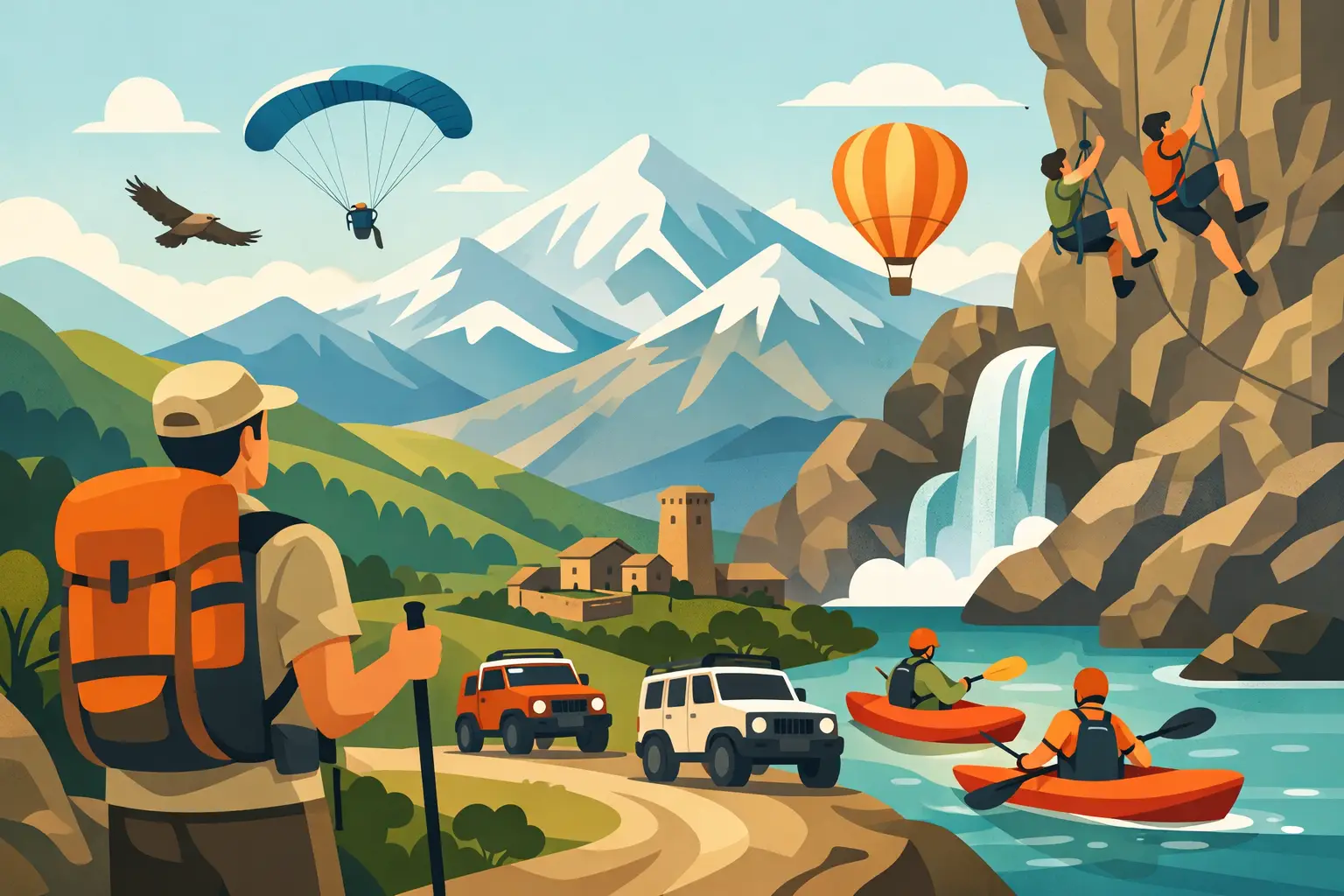
A morning in Tbilisi can begin with fresh khachapuri and end above the clouds on the Georgian Military Highway, looking toward Mount Kazbegi. That contrast is the appeal of Georgia adventure travel: a compact country where ancient monasteries, high Caucasus trails, family-run wine cellars, and rough mountain roads can all belong to the same trip.
Georgia rewards travelers who want more than a checklist of European capitals. The distances can look short on a map, but landscapes change quickly, roads can be demanding, and mountain weather makes its own rules. With the right route, local guide, and pace, the journey feels exciting without becoming a logistics exercise.
What Makes Georgia Adventure Travel Different
Adventure in Georgia is not limited to reaching a summit. A day can combine a hike beneath snowy peaks with a homemade lunch in a village. A cycling route may pass vineyards, medieval towers, and roadside bakeries selling warm bread. Even a 4×4 journey into Tusheti or Khevsureti becomes a cultural experience, because the remote communities at the end of the road are part of the destination.
The country is especially well suited to travelers who want variety. Serious hikers can plan multi-day routes between highland villages, while first-time visitors can choose an active day trip from Tbilisi with manageable walking and dramatic scenery. Couples may pair Kazbegi hiking with Kakheti wine country; friends can combine off-road travel, rafting, and city evenings; families can select gentler walks, cave towns, and scenic transfers.
Georgia is also a place where hospitality changes the rhythm of an active vacation. Mountain days are often followed by generous tables, local cheese, grilled meats, vegetable dishes, and qvevri wines made in clay vessels. You may arrive for the trail, but remember the welcome as clearly as the view.
Choose Your Georgian Adventure by Region
Kazbegi for high-mountain views and accessible hiking
Kazbegi is one of the easiest ways to experience the Greater Caucasus from Tbilisi. The famous Gergeti Trinity Church sits high above Stepantsminda, with Mount Kazbegi forming a powerful backdrop when conditions are clear. The walk to the church can be approached at different levels, from vehicle-supported sightseeing to a rewarding uphill hike.
For stronger hikers, the surrounding valleys offer longer routes, waterfalls, ridges, and remote viewpoints. The best season for most summer hiking is generally late June through September, though snow can linger at higher elevations. Spring and fall bring fewer visitors and rich colors, but weather is less predictable.
Svaneti for trekking among medieval towers
Svaneti feels built for travelers who measure a trip in walking days rather than hotel nights. The region’s stone defense towers, glacier-fed rivers, and high villages give every route a strong sense of place. The classic trek between Mestia and Ushguli is a standout, but it is not simply a casual walk. It requires sound fitness, suitable footwear, changing-weather layers, and careful planning for accommodations and luggage transfer.
Ushguli, one of Europe’s highest inhabited settlements, is often the emotional high point. Yet Svaneti is worth more than one famous route. Shorter hikes around Mestia suit travelers with limited time, while guided multi-day trekking opens up quieter valleys and provides confidence when trail conditions shift.
Tusheti and Khevsureti for true remote-country travel
Tusheti and Khevsureti are for those who want the road itself to be part of the adventure. Access is seasonal, typically during the snow-free months, and involves steep, narrow mountain roads best handled by experienced local drivers in appropriate 4×4 vehicles. This is not the place to rely on a rental car app and optimism.
The reward is striking: isolated villages, old towers, broad alpine slopes, shepherds’ trails, and a sense of distance that is increasingly rare in Europe. Accommodation is usually simple and warm rather than luxurious. Travelers who welcome that trade-off will find these regions unforgettable.
Kakheti for active wine country
Kakheti proves that an adventure itinerary does not need to be all altitude and exertion. Cycling through vineyard landscapes, walking around fortified Sighnaghi, exploring monastery complexes, and visiting family wine cellars create a slower but richly textured experience. It is an excellent counterpoint to a demanding mountain segment.
A wine-focused day is best enjoyed with a driver or organized tour, especially if tastings are part of the plan. Georgia’s wine culture is generous, and the sensible choice is to let someone else handle the road home.
Borjomi, Vardzia, and the south for hiking with history
Southern Georgia offers a different kind of active travel. The forests around Borjomi are inviting for walks and longer hikes, while Vardzia’s vast cave monastery complex brings history into the landscape in spectacular fashion. This area works particularly well for travelers who want outdoor time without committing to high-altitude trekking.
The route also connects naturally with cultural sites, mineral-water traditions, and regional food. For a first trip, it can be a smart way to balance physical activity with comfortable travel days.
Match the Trip to Your Fitness and Comfort Level
The best Georgian adventure is not necessarily the hardest one. Travelers sometimes underestimate elevation gain, heat, rough roads, or the effect of rapidly changing weather. A full-day hike in the Caucasus can be demanding even when the distance looks modest, while a remote-road transfer may take longer than expected.
Be honest about the experience you want. An active classic itinerary can include scenic walks, cable cars, monastery visits, and mountain viewpoints without requiring technical hiking. A trekking itinerary should clearly state daily distance, ascent, terrain, accommodation style, and whether bags are carried or transferred. Winter trips need another layer of planning, from avalanche-aware guiding to proper clothing and transport suited to snow.
For independent-minded travelers, a guided arrangement is not a compromise. In remote areas, it often gives you more freedom to enjoy the landscape: a driver knows the mountain roads, a local guide reads the conditions, and accommodations are prepared when you reach the village. You still earn the view. You simply avoid spending the evening solving transportation problems.
When to Go for Outdoor Adventure in Georgia
Summer is the prime window for highland trekking, especially in Svaneti, Tusheti, Khevsureti, and Kazbegi. July and August bring the most reliable access to high routes, along with warmer temperatures and more visitors. Book mountain accommodations early if your dates are fixed.
May, June, September, and October can be excellent for lower-elevation hiking, cycling, culture, and wine travel. September is particularly appealing in Kakheti, when grape harvest season brings energy to the vineyards. Conditions in the mountains remain variable, so do not treat a calendar date as a weather guarantee.
Winter shifts the focus toward skiing, snowshoeing, and snowy mountain scenery. Gudauri is Georgia’s best-known ski base, while Bakuriani offers a different atmosphere and can work well for families. Winter travel has a special beauty, but it calls for flexible schedules because snow and road conditions can alter plans.
Pack for Changeable Conditions, Not Just the Forecast
A practical packing strategy makes a noticeable difference in Georgia. For hiking, bring broken-in boots, a waterproof outer layer, insulating layers, sun protection, a refillable water bottle, and a small daypack. Mountain weather can move from bright sun to cold rain quickly, even in summer.
For village stays and cultural visits, modest, comfortable clothing is useful. Churches and monasteries are living religious places, so visitors should dress respectfully. Carry some local currency for smaller purchases in rural areas, although cards are widely accepted in Tbilisi and larger towns.
Travel insurance that covers your planned activities is wise, particularly for trekking, skiing, or cycling. If you have dietary requirements, communicate them before the trip. Georgian hosts are famously generous, and advance notice gives them the best chance to prepare a meal you can enjoy.
Build an Itinerary That Leaves Room for the Unexpected
A strong adventure itinerary alternates big days with breathing room. Rather than racing from Tbilisi to Kazbegi, Svaneti, Kakheti, and Batumi in one week, choose two or three regions and experience them properly. A 10- to 14-day trip can comfortably mix city culture, mountain activity, and wine country; a shorter visit is often best centered on Tbilisi plus Kazbegi or Kakheti.
Allow buffer time around remote mountain travel. A clear morning may become a foggy afternoon, a road may slow after rain, and a spontaneous invitation to lunch can become the most memorable part of the day. That flexibility is not lost time. It is how Georgia reveals itself.
Colour Tour Georgia can help shape that balance with guided day trips, trekking programs, off-road routes, transfers, accommodations, and active itineraries matched to your experience level. Start with the adventure that genuinely excites you, then leave a little space in the plan for a mountain table, an unplanned viewpoint, and the kind of welcome that makes a return trip feel inevitable.