


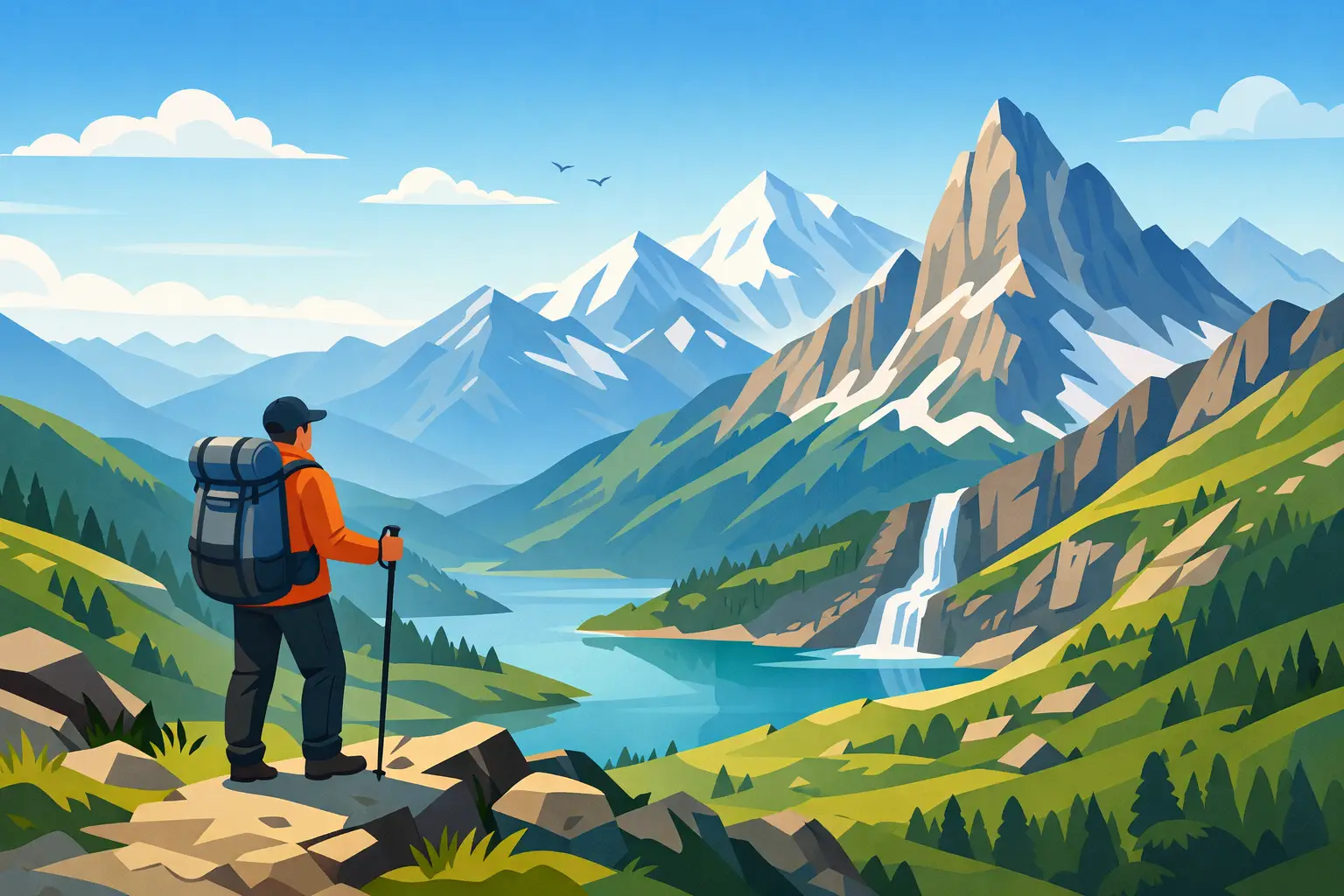
A medieval tower above a green valley, a glacier under a 16,000-foot summit, lunch in a family guesthouse where khachapuri arrives faster than you expect: the best Caucasus hiking trails deliver more than a workout. They take you into living mountain regions where trails connect villages, shepherds’ pastures, churches, and centuries-old defensive towers.
For many international travelers, Georgia is the most accessible starting point for a Caucasus hiking vacation. Its trail network ranges from easy half-day walks near Kazbegi to demanding multi-day crossings in Tusheti and Svaneti. Armenia and Azerbaijan add rewarding routes of their own, especially for travelers building a wider South Caucasus itinerary. The right trail depends on your fitness, hiking experience, available time, and how comfortable you are with remote mountain logistics.
The 12 best Caucasus hiking trails
1. Mestia to Ushguli, Svaneti, Georgia
This four-day classic is the route many people mean when they talk about trekking in Georgia. Starting in Mestia, the trail crosses flower-filled meadows, high passes, and small Svan villages before reaching Ushguli, one of Europe’s highest permanently inhabited settlements. Snowy Mount Shkhara fills the horizon near the finish.
Daily distances are substantial, but luggage transfers and village guesthouses make the trek achievable for fit hikers without full expedition experience. Plan for late June through September. Earlier in the season, snow can linger on the Adishi and Chkhunderi sections.
2. Koruldi Lakes, Mestia, Georgia
For a huge Svaneti panorama without committing to four trekking days, hike above Mestia to the Koruldi Lakes. The route climbs steeply from town toward alpine lakes beneath Mount Ushba, whose twin summit is among the Caucasus’ most dramatic sights.
It is a demanding day hike rather than a technical ascent. A 4WD transfer can shorten the uphill section, which makes this a smart option for travelers who want big scenery but have only one day in Svaneti. Start early, as afternoon clouds often hide the peaks.
3. Chalaadi Glacier, Svaneti, Georgia
Chalaadi is a more accessible glacier walk near Mestia, with a forest approach, a suspension bridge, and a striking wall of ice at the end. The trail is suitable for active families and first-time mountain hikers, although the rocky final stretch needs steady footing.
The hike itself is relatively short. What makes it memorable is the close-up glacier setting and the contrast between the rushing river valley and the cold, high slopes above it. Do not walk onto the glacier without proper equipment and local expertise.
4. Juta to Roshka via Chaukhi Pass, Georgia
The Chaukhi massif rises like a jagged stone crown above the village of Juta. From here, a serious one- or two-day route heads toward Roshka over the Chaukhi Pass, passing the small Abudelauri lakes and some of the finest high-mountain scenery in Khevsureti.
This is for confident hikers with good stamina, weather awareness, and experience on rough trails. Snowfields can remain well into summer, and fog changes an otherwise clear route into a navigation challenge. A guide and arranged pickup are strongly recommended.
5. Gergeti Trinity Church to Gergeti Glacier, Kazbegi, Georgia
Gergeti Trinity Church is famous for good reason, but continuing beyond the church is where the landscape becomes truly wild. The trail toward Gergeti Glacier climbs beneath Mount Kazbegi, Georgia’s iconic volcanic giant, with wide views across the Dariali Valley.
You can make the church a moderate half-day hike from Stepantsminda, while the glacier route is a long, demanding full day or an overnight trek. Conditions change quickly at altitude. Bring warm layers even in August, and do not confuse a clear morning forecast with a guaranteed clear afternoon.
6. Truso Valley, Kazbegi, Georgia
Truso Valley offers an easier walking day with an extraordinary concentration of scenery: mineral springs, rust-colored travertine formations, abandoned stone villages, and open views toward the Greater Caucasus. Much of the route follows a broad valley track, so it is less technical than nearby mountain passes.
Its trade-off is exposure. There is little shade, and the wind can be fierce. Truso is excellent for travelers who want a scenic walk, photography, and a glimpse of Georgia’s highland history without the demands of a steep summit trail.
7. Omalo to Shatili, Tusheti and Khevsureti, Georgia
This is one of Georgia’s great wilderness crossings, connecting two remote highland regions through passes, ridges, and isolated valleys. It is not a casual point-to-point walk. The route generally takes several days, requires careful food and overnight planning, and is only realistic during the short summer access season.
The reward is profound solitude and a sense of traveling through a landscape that remains shaped by seasonal migration and mountain tradition. Road access to Tusheti is itself weather-dependent, so build flexibility into any itinerary. For most visitors, this route is best undertaken as a supported guided trek.
8. Dartlo to Parsma, Tusheti, Georgia
Dartlo’s distinctive stone houses and defensive towers make a memorable base for day hikes in Tusheti. The walk toward Parsma follows the Pirikiti Alazani Valley through a broad, pastoral landscape with high peaks ahead and traditional villages along the way.
This is a rewarding choice for hikers who want Tusheti’s character without committing to a major pass crossing. Distances can be adapted to your group and transport arrangements. July through early September is usually the practical window, though road conditions always have the final say.
9. Shatili to Mutso, Khevsureti, Georgia
In Khevsureti, the journey is as much about architecture and history as elevation gain. Shatili and Mutso are remarkable fortified villages built into steep mountain terrain, and the route between them can be arranged as a hiking-focused day with vehicle support where needed.
The terrain is rugged, but this is more flexible than a long wilderness traverse. It suits travelers interested in Georgia’s ancient highland culture, dramatic stone settlements, and moderate active days. A local guide adds real value here, helping turn silent ruins into a story of clans, defense, and mountain life.
10. Borjomi-Kharagauli National Park, Georgia
Not every great Caucasus hike has to be above the tree line. Borjomi-Kharagauli National Park offers marked routes through dense forest, grassy ridges, and open viewpoints in central Georgia. It is one of the best choices for travelers visiting in late spring or early autumn, when the highest mountain routes may be snowy or cold.
Choose a route based on time and fitness, from a short forest walk to a multi-day hut-to-hut trek. Compared with Tusheti or Svaneti, navigation and logistics are simpler, making this a strong fit for independent hikers who still want a genuine wilderness feel.
11. Dilijan Forest Trails, Armenia
Dilijan National Park brings a gentler, greener side of the Lesser Caucasus. Trails through beech and oak forest link monasteries, lakes, and small villages, with the route between Haghartsin and Parz Lake among the better-known options.
This is a fine contrast to Georgia’s higher, rockier trekking regions. The hiking is often moderate, cultural stops are close at hand, and the area works well within a Georgia-Armenia itinerary. Trail conditions vary by season, so local route advice remains useful after heavy rain.
12. Khinalig to Galakhudat, Azerbaijan
High in Azerbaijan’s Greater Caucasus, Khinalig is a mountain village with a distinct language, strong traditions, and a spectacular setting. Treks from the village toward Galakhudat and surrounding valleys reveal rolling high pastures, limestone ridges, and a quieter side of the region.
This is a remote route where permissions, road conditions, and guide arrangements deserve attention before departure. It rewards travelers looking beyond headline destinations, but it is not the place to arrive without a plan. A cross-border Caucasus program can make the practical details far easier.
How to choose a Caucasus hiking trail
First, be honest about elevation and remoteness. A trail described as moderate in the Caucasus may still involve steep climbs, unmarked stretches, river crossings, and rapidly changing weather. If you are used to well-signed national park trails in the United States or the Alps, give yourself extra margin here.
For a first Georgia hiking trip, pair an accessible route such as Truso Valley, Chalaadi Glacier, or Gergeti Trinity Church with a few nights in Kazbegi or Mestia. Fit hikers with four to six days should look at the Mestia to Ushguli trek. Experienced trekkers seeking real isolation can consider Tusheti or Khevsureti, ideally with a local guide, transport support, and flexible overnight plans.
The main hiking season is generally June through September. July and August bring the most reliable access to high passes, but also busier guesthouses in Svaneti and hotter conditions at lower elevations. September can be especially beautiful, with clearer light and autumn color, although early snow is possible in the highest terrain.
Pack waterproof layers, sun protection, broken-in boots, a reusable water bottle, and a small first-aid kit. Offline maps are helpful but should not replace local judgment. In remote valleys, mobile coverage can vanish, bridges can be damaged after storms, and a straightforward route can change overnight.
The Caucasus rewards travelers who leave room for the unexpected: a road delayed by rain, a guesthouse dinner that becomes a toast-filled evening, or a mountain view that convinces you to stay another day. Whether you choose a single walk from Kazbegi or a full Svaneti crossing, Colour Tour Georgia can help match the trail, guide, transport, and accommodations to the kind of adventure you want.