


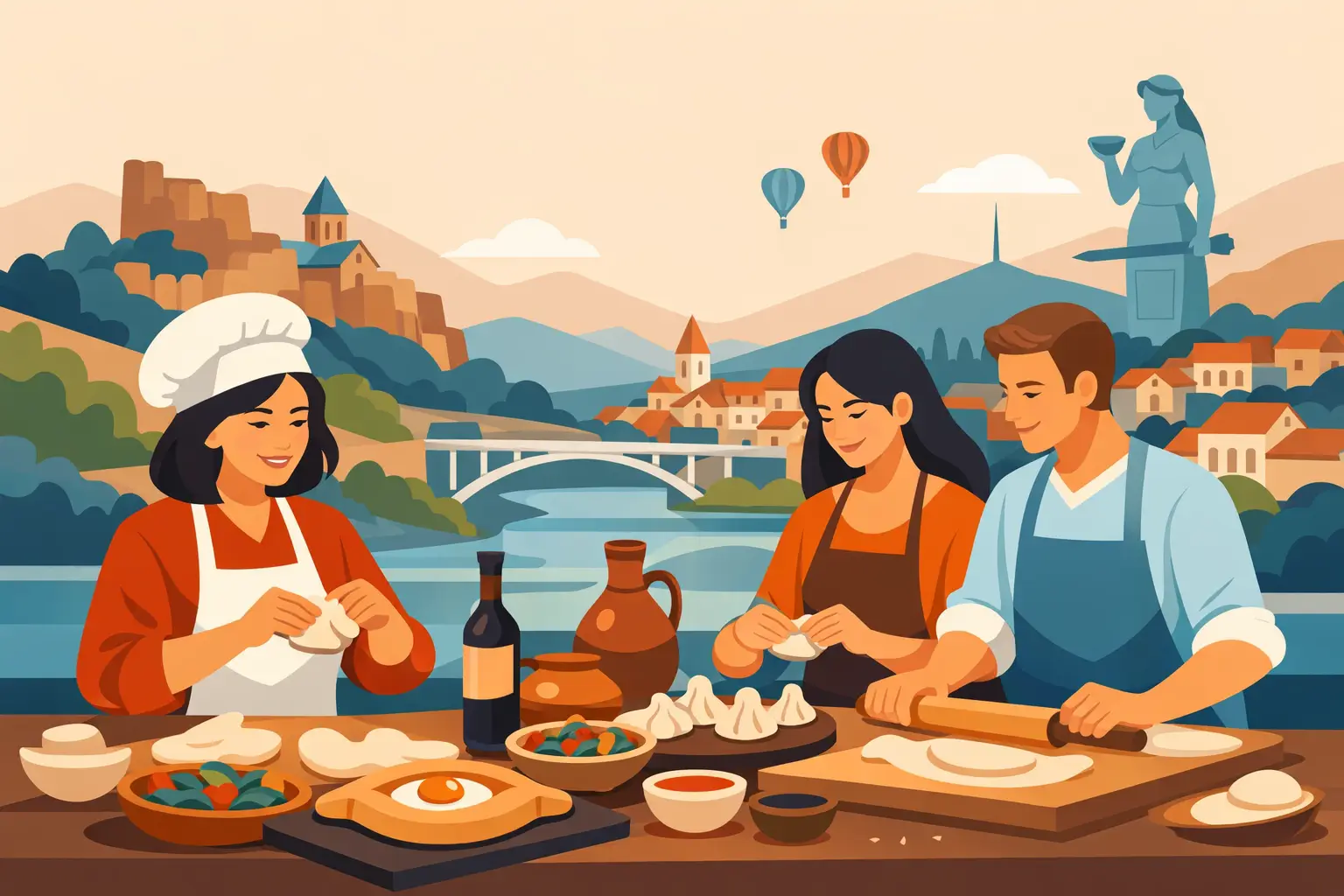
A pleated khinkali dumpling looks simple until you try to make one. The dough must be thin but strong, the filling juicy but contained, and the folds gathered firmly enough to hold a burst of fragrant broth. That hands-on moment is why a Georgian cooking class Tbilisi experience can become one of the most memorable parts of a trip: you are not only tasting Georgia’s famous food, but learning the skill, stories, and generosity behind the table.
Tbilisi is the natural place to begin. Georgia’s capital brings together regional ingredients, family recipes, lively markets, wine traditions, and hosts who understand that cooking is rarely a solitary activity. A class can fit neatly into a city break, complement a Kakheti wine tour, or give families and small groups a warm, easygoing introduction before heading into the mountains, coast, or historic towns.
What Makes Georgian Cooking So Memorable?
Georgian cuisine is built for sharing. A proper meal arrives in courses, with dishes placed at the center of the table rather than served as individual plates. Fresh herbs, walnuts, seasonal vegetables, cheese, beans, grilled meats, and aromatic spices all have their place, while local wine keeps the conversation moving.
The food is also deeply regional. Khachapuri, Georgia’s celebrated cheese bread, changes character from one region to another. In Adjara, near Batumi on the Black Sea coast, it arrives boat-shaped with melted cheese, egg, and butter. In Imereti, it is a round, closed pie. A good class in Tbilisi may introduce a classic version while explaining why there is no single recipe that represents every Georgian kitchen.
That regional variety matters when choosing a class. Some sessions focus on the best-known comfort foods, while others explore vegetarian dishes, seasonal market cooking, or traditional techniques such as preparing bread in a tone clay oven. Neither approach is better. It depends on whether you want recognizable favorites, a deeper culinary lesson, or a menu suited to dietary needs.
What You May Cook in a Georgian Cooking Class in Tbilisi
Most classes are designed around a small menu that travelers can realistically recreate at home. Khinkali and khachapuri are frequent stars, but they are only the beginning.
You might prepare pkhali, colorful vegetable and walnut spreads shaped into small rounds and finished with pomegranate seeds. Eggplant rolls filled with walnut paste are another classic, balancing earthy eggplant with garlic, herbs, and a gentle spice. Lobio, a slow-cooked bean dish, shows how satisfying Georgian vegetarian cooking can be, especially when served with mchadi cornbread and pickles.
Meat-focused menus may include mtsvadi, charcoal-grilled skewers, or a rich stew flavored with herbs and spices. For something especially traditional, ask whether the class includes a sauce or seasoning such as adjika. This fiery paste has many regional variations and reveals how Georgian cooks build flavor with more than heat alone.
The most enjoyable sessions do not rush straight to the finished plate. You may mix dough, chop herbs, grind walnuts, learn how to season a filling, and discover why a Georgian cook judges ingredients by texture and aroma as much as by exact measurements. Recipes are useful souvenirs, but watching a host adjust dough with a little water or taste a walnut sauce before serving teaches something a printed card cannot.
The Khinkali Lesson: More Than a Dumpling
Khinkali deserve special attention because they come with their own etiquette. Traditionally, diners hold the dumpling by its top knot, take a small bite, sip the hot broth inside, then continue eating the filling. The knot is often left on the plate. There are no food police at a friendly table, but learning the custom makes the meal more fun.
A host may also explain the difference between mountain-style khinkali, often seasoned simply with meat, onion, salt, and pepper, and herb-filled city versions. For vegetarian travelers, mushroom, potato, or cheese fillings may be available, although choices vary by kitchen and season.
How to Choose the Right Tbilisi Cooking Experience
A cooking class should match your travel style, not become a complicated production. Before booking, consider the length of the session, the location, the group size, and what is included. A short class can be an excellent afternoon activity after walking Old Tbilisi, while a longer market-to-table experience suits travelers who want to understand ingredients before stepping into the kitchen.
For couples and friends, a small-group class often offers the best balance of energy and personal attention. Solo travelers may enjoy the social side of cooking with others, especially when the meal ends with a glass of Georgian wine. Families should look for a relaxed format with simple hands-on tasks, since dough shaping and bread making can be particularly engaging for children.
Dietary requirements need clear advance communication. Georgian food offers many naturally vegetarian options, but walnuts are common, dairy is central to many cheese dishes, and meat broth may appear in recipes that seem flexible at first glance. Vegan and gluten-free adaptations are sometimes possible, but traditional dough-based favorites may need to be replaced rather than lightly adjusted. It is better to choose a host who can plan a satisfying menu than to arrive expecting every signature dish to be altered.
Language also makes a difference. English-speaking instruction allows you to ask about substitutions, techniques, and food customs as you cook. If you are traveling with German-speaking relatives or an international group, confirm the teaching language before reserving. For private departures, it may be possible to arrange a more tailored format around your interests, schedule, and preferred dishes.
Pair Your Class With a Wider Food and Wine Journey
Tbilisi is a wonderful introduction, but Georgian cuisine becomes even richer when you see where it comes from. A cooking class pairs naturally with a wine-focused day in Kakheti, where qvevri wine is made in large clay vessels buried underground. It can also add a delicious pause before an active journey to Kazbegi, Svaneti, Tusheti, or the cave cities of southern Georgia.
If your itinerary is short, schedule the class early in your stay. Once you know what pkhali, lobio, churchkhela, and khachapuri are, market stalls and restaurant menus become far more inviting. You will also be better prepared to order regional specialties with confidence as you travel.
For travelers organizing a broader trip, Colour Tour Georgia can help place a culinary activity alongside transfers, accommodations, wine visits, city touring, and multi-day routes across the country. The practical advantage is simple: less time coordinating logistics, more time at the table and on the road.
A Few Useful Tips Before You Arrive
Come hungry, but not ravenous. Georgian cooking classes commonly end with a generous sit-down meal, and tasting happens throughout the preparation. Wear comfortable clothing and shoes, especially if the experience includes a market visit or baking in a warm kitchen. If you have long hair, bring something to tie it back.
Do not expect every recipe to be measured with laboratory precision. Georgian home cooking is often guided by experience, seasonality, and taste. Ask for approximate quantities if you plan to make the dishes at home, but also pay attention to visual cues: how soft the dough feels, how finely walnuts are ground, and how much herb goes into a filling.
Finally, stay for the conversation. A Georgian meal is shaped by hospitality as much as by ingredients. Your host may share family memories, regional debates over the best khachapuri, or a toast to friendship and safe travels. Those moments turn a cooking lesson into a genuine encounter with Colorful Georgia.
When you return home and attempt your first imperfect khinkali fold, do not worry if it looks nothing like the one on your Tbilisi plate. Serve it with friends, pour a good wine, and keep the spirit of the Georgian table alive: generous, curious, and always ready for one more guest.